
Venetian plaster, Marmorino and polished plaster in Vancouver.
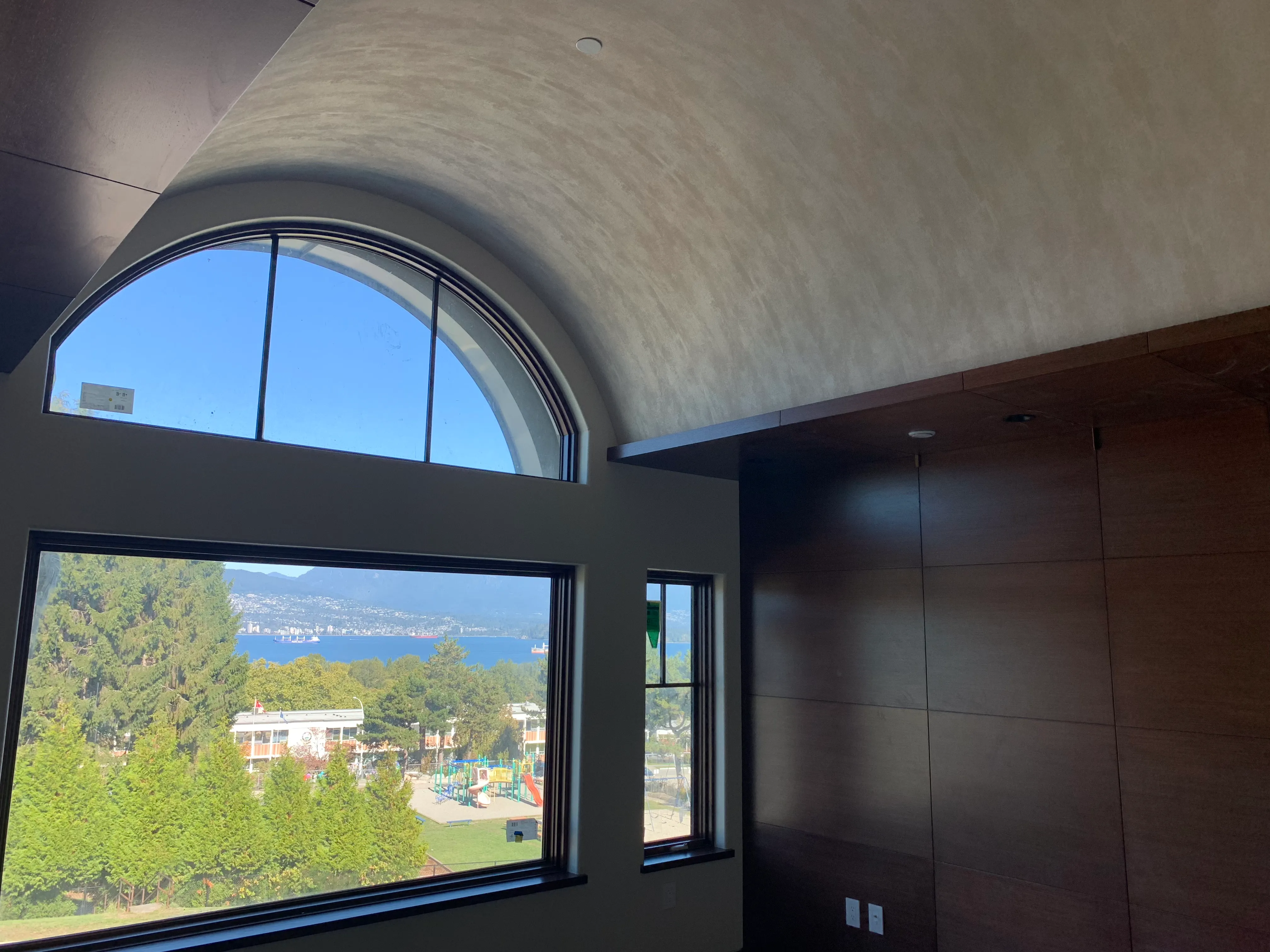
Lime and mineral finishes applied and burnished by hand — surfaces with real depth, movement and reflectivity, from soft matte Marmorino to mirror-polished Venetian and liquid metal.
Depth you cannot print, and cannot fake.
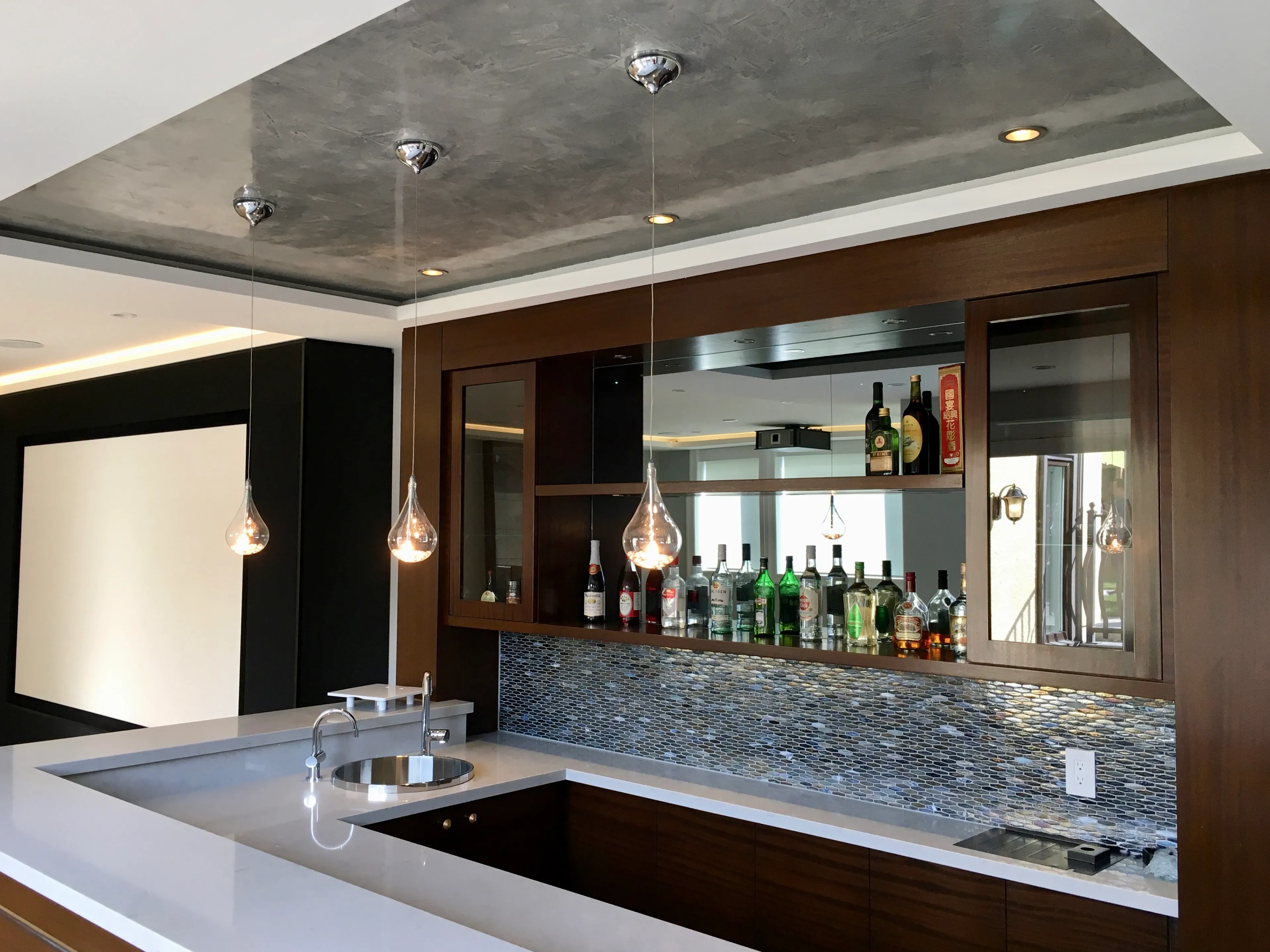
Traditional Venetian plaster is slaked lime and finely ground marble, applied in thin successive passes and then compressed with a steel trowel. The burnishing is what creates the effect: light enters the surface, scatters through the translucent lime, and reflects back off the marble beneath it. The result reads as stone rather than as paint, because optically that is close to what it is.
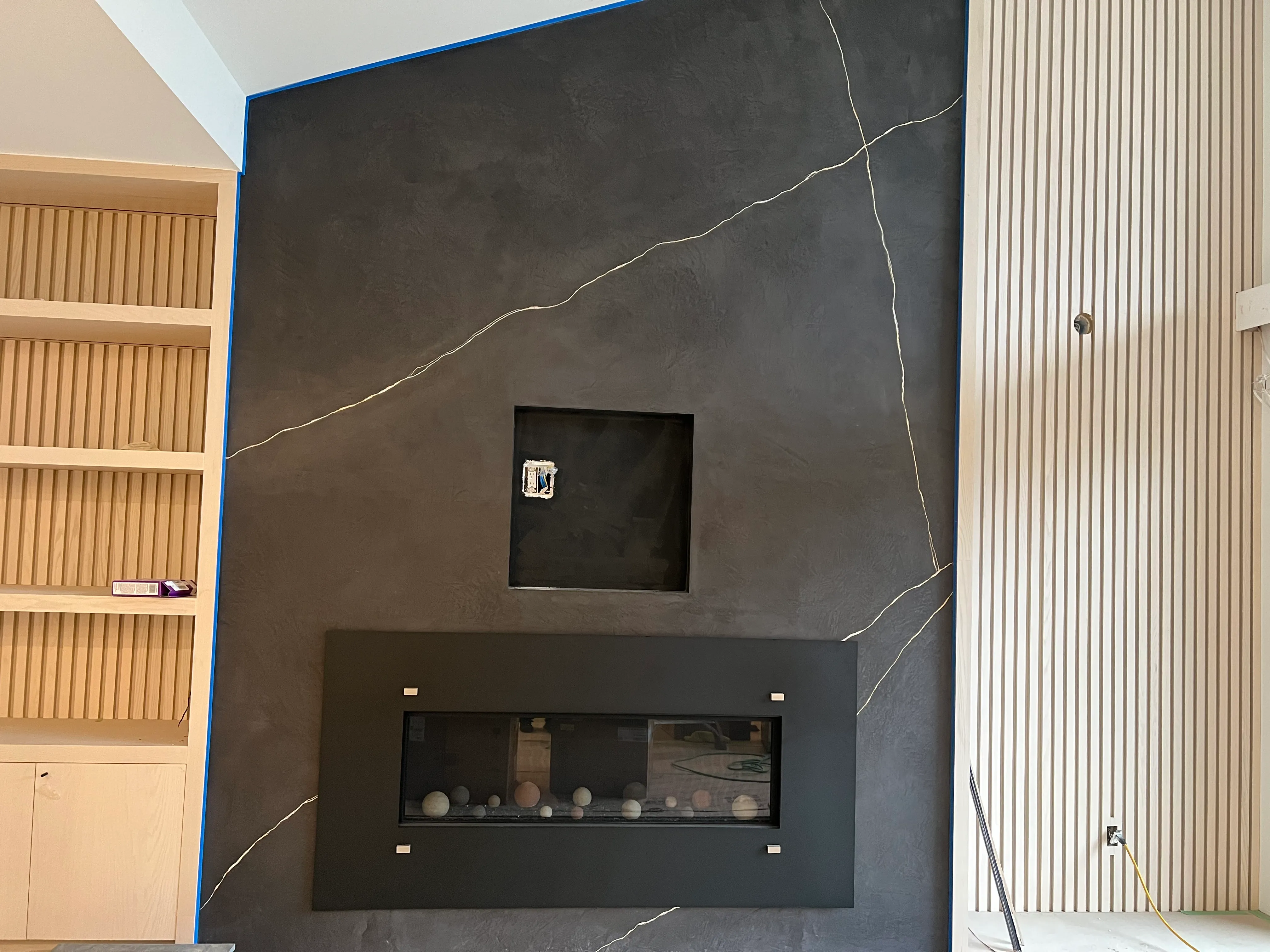
Marmorino uses a coarser aggregate for a softer, more matte and more tactile surface. Polished plaster sits between the two. Liquid metal replaces the marble with real metal particles — bronze, brass, iron or copper — which are then burnished and, where specified, patinated to age the surface deliberately.
All of them are applied by hand, which means the finish carries the movement of the trowel. No two walls are identical, and that is the point.
What we apply.
Venetian plaster
Highly burnished lime and marble finish with visible depth and a polished, stone-like surface. Walls, ceilings and feature elements.
Italian plaster
Traditional Italian lime finishes in a range of sheens, applied with the methods and materials they were developed for.
Marmorino
Coarser aggregate, softer matte surface with a tactile texture. Reads quieter than Venetian and suits larger wall areas.
Polished plaster
A controlled sheen between Marmorino and full Venetian, specified where you want depth without a mirror finish.
Liquid metal
Real metal particles applied over a prepared surface, then burnished and optionally patinated. Bronze, brass, iron and copper.
Custom architectural finishes
Developed to a sample for a specific project, where nothing off the shelf gives the colour, sheen or texture the space needs.
Actual metal, applied like a finish.
Liquid metal is not a metallic paint. It is real metal powder suspended in a binder, applied over a shaped substrate, then sanded and burnished until it behaves like solid metal to the eye and to the hand. Patination can be pushed further to age the surface deliberately.
Because it is applied rather than cast, it wraps curves, reveals, columns and furniture forms that would be impractical or prohibitively heavy in solid metal — which is why the same finish appears on our walls and on the tables that sit against them.
Decorative finishes, answered.
What is the difference between Venetian plaster and Marmorino?
Both are lime-based. Venetian plaster uses a finer marble aggregate and is burnished to a high polish with visible optical depth. Marmorino uses a coarser aggregate and finishes softer and more matte, with a tactile texture. Venetian reads as stone; Marmorino reads as a rendered wall.
Can decorative plaster be used in a bathroom?
Lime finishes are used in bathrooms regularly, with the specification depending on how much direct water the surface takes. Splash zones and shower interiors need a different approach from a vanity wall, and we confirm the correct system for each surface at the site visit rather than applying one finish everywhere.
Is liquid metal the same as metallic paint?
No. Metallic paint contains pigment that imitates metal. Liquid metal contains real metal particles which are burnished after curing and can be patinated, so the surface oxidises and reflects the way metal does because it is metal.
Can you match a sample or an existing finish?
Usually. Custom finishes are developed to a sample board and approved before any wall is coated, which is the only reliable way to agree colour, sheen and texture given how much hand application affects the result.
Premium Materials We Work With
Venetian plaster and decorative finish systems we apply — manufacturer details to be added.
See it as a sample first.
Hand-applied finishes should be approved on a board before they are approved on a wall. We prepare samples to your space, your light and your colour before any surface is committed.