
Stretch Ceilings in Vancouver
Matte, satin, gloss and printed stretch ceilings, backlit panels and fibre-optic star ceilings — installed to a clean perimeter detail in homes, retail and hospitality interiors.
What a Stretch Ceiling Actually Is
A stretch ceiling is a tensioned membrane fixed to a perimeter track a few centimetres below the existing structure. It arrives as a single sheet, so the finished surface has no joints, no taping, and no repainting cycle.
Because the membrane sits below the slab, it conceals services, ductwork, wiring and uneven concrete — and it can be removed and re-tensioned if access is ever needed above it. That combination is why it appears so often in condominiums and retrofit work.
Finishes and Options
Matte
Reads like a flawless painted ceiling, without the joints, hairline cracking or repainting. The most common choice in residential interiors.
Satin
A soft sheen that lifts light levels without turning the ceiling into a mirror. The middle ground between matte and gloss.
Gloss
A reflective surface that visually raises ceiling height and bounces light through the room. Striking in darker rooms and feature spaces.
Backlit Ceilings
A translucent membrane over a lit cavity, producing an even, shadowless glow across the whole panel rather than visible spot sources.
Star Ceilings
Fibre-optic points set behind the membrane to create a night-sky effect, used in home theatres, bedrooms and spa areas.
Printed Ceilings
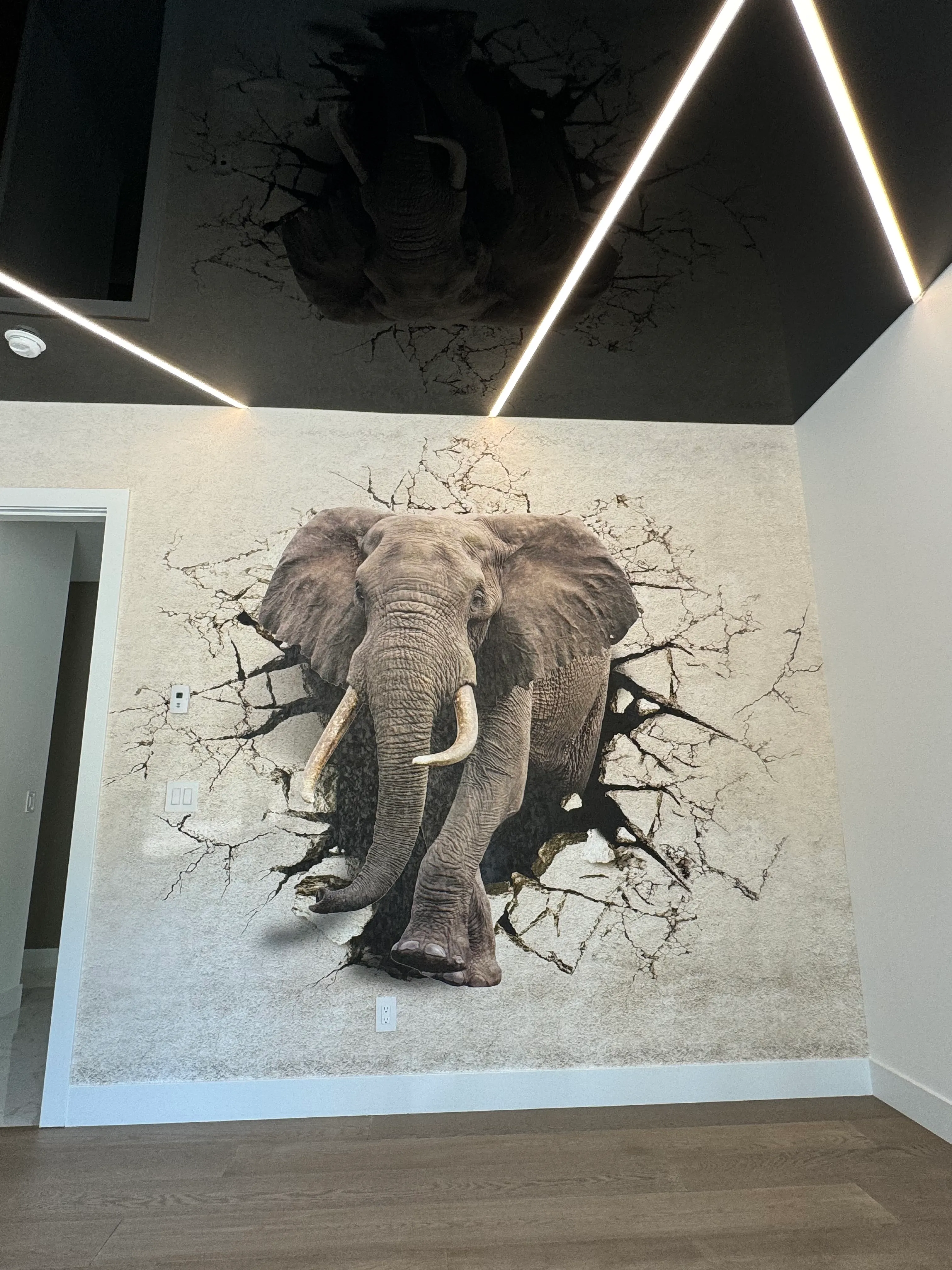
Custom imagery or pattern printed onto the membrane at full scale, colour-checked and approved before production.
Where Stretch Ceilings Work Well
They suit rooms with uneven or damaged ceilings, condominiums where the slab cannot be altered, wet areas where painted drywall fails, and any space where lighting needs to be integrated rather than surface-mounted. Installation happens after the dusty trades are finished, which usually places it near the end of a renovation.
What to Expect
Survey & Template
The room is measured precisely and the membrane is cut to that template. Accurate site dimensions matter more here than on most finishes.
Track Installation
The perimeter track is fixed to the walls or ceiling. This sets the finished height and the shadow-gap detail around the room.
Lighting First
Backlighting, fibre optics and recessed fittings are positioned and wired before the membrane goes up. Electrical connection is carried out by licensed electrical professionals.
Tensioning
The membrane is warmed, stretched and locked into the track. Most rooms are completed within a day, with very little dust or disruption.
Stretch Ceiling Questions
How much ceiling height is lost?
Typically around 3–5 cm, and more where lighting sits in the cavity above the membrane. We confirm the exact drop once the track position and fittings are settled.
Can it be installed in a bathroom or kitchen?
Yes. The membrane does not absorb moisture, which is why it performs well in rooms where painted drywall tends to stain, peel or grow mould.
What happens if it is damaged?
A punctured membrane is replaced rather than patched. The track stays in place, so replacement is considerably less disruptive than a drywall ceiling repair.
Can light fittings be moved later?
They can, but it means de-tensioning and re-tensioning the membrane, and the previous opening remains visible. Lighting layout is worth settling before installation.
Ceiling Systems in Detail
Backlit Stretch Ceilings
Translucent membranes lit evenly from behind, with recessed linear light lines and perimeter cove detailing built into the ceiling rather than mounted on it.
Explore backlit ceilingsStar Ceilings
Fibre-optic starlight fields for home theatres, bedrooms and spas, with a remote illuminator so no heat or current reaches the ceiling surface.
Explore star ceilingsCustom & Linear Lighting
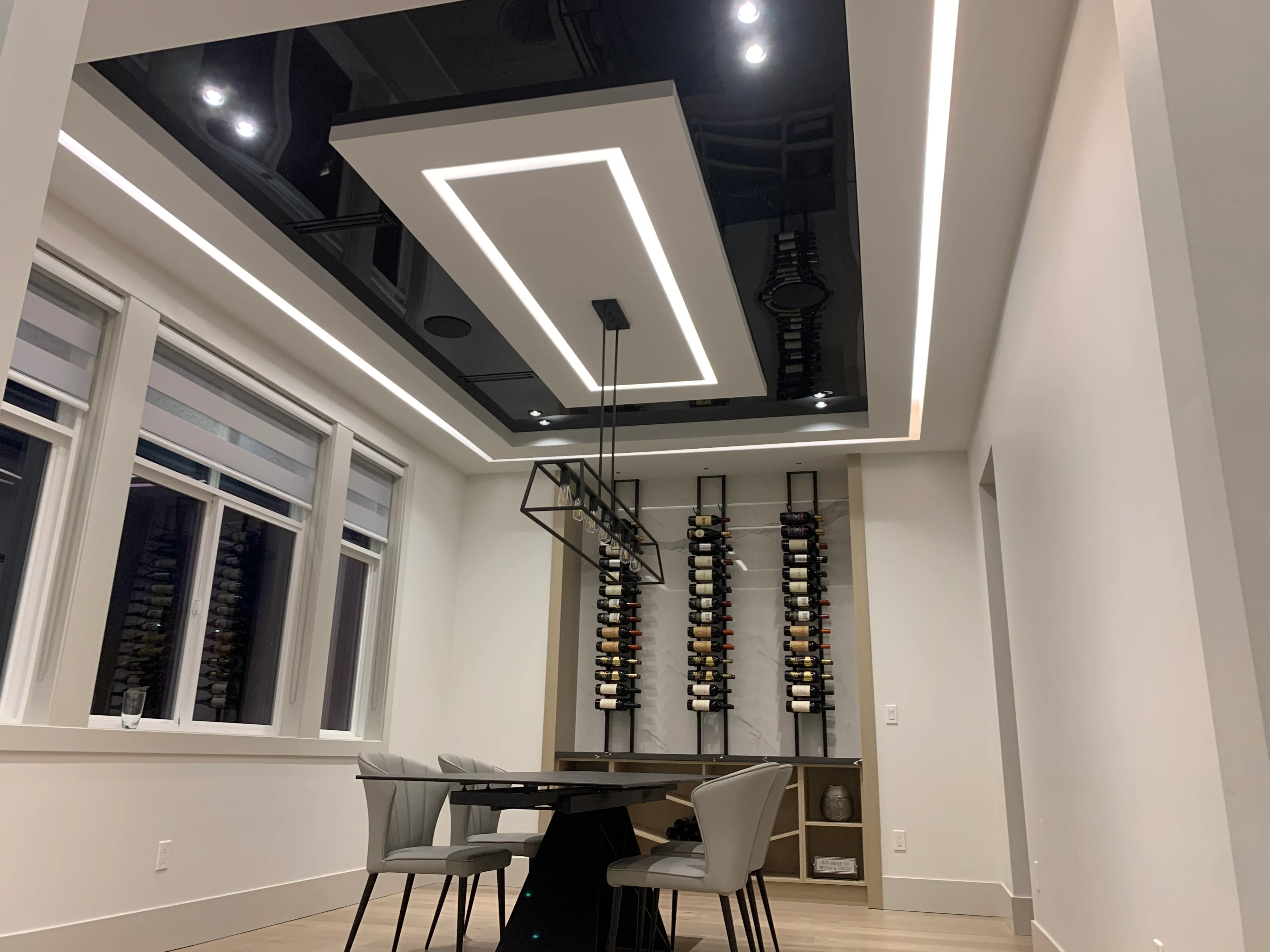
Linear runs, cove details and integrated architectural lighting detailed into walls and ceilings during construction.
Explore custom lighting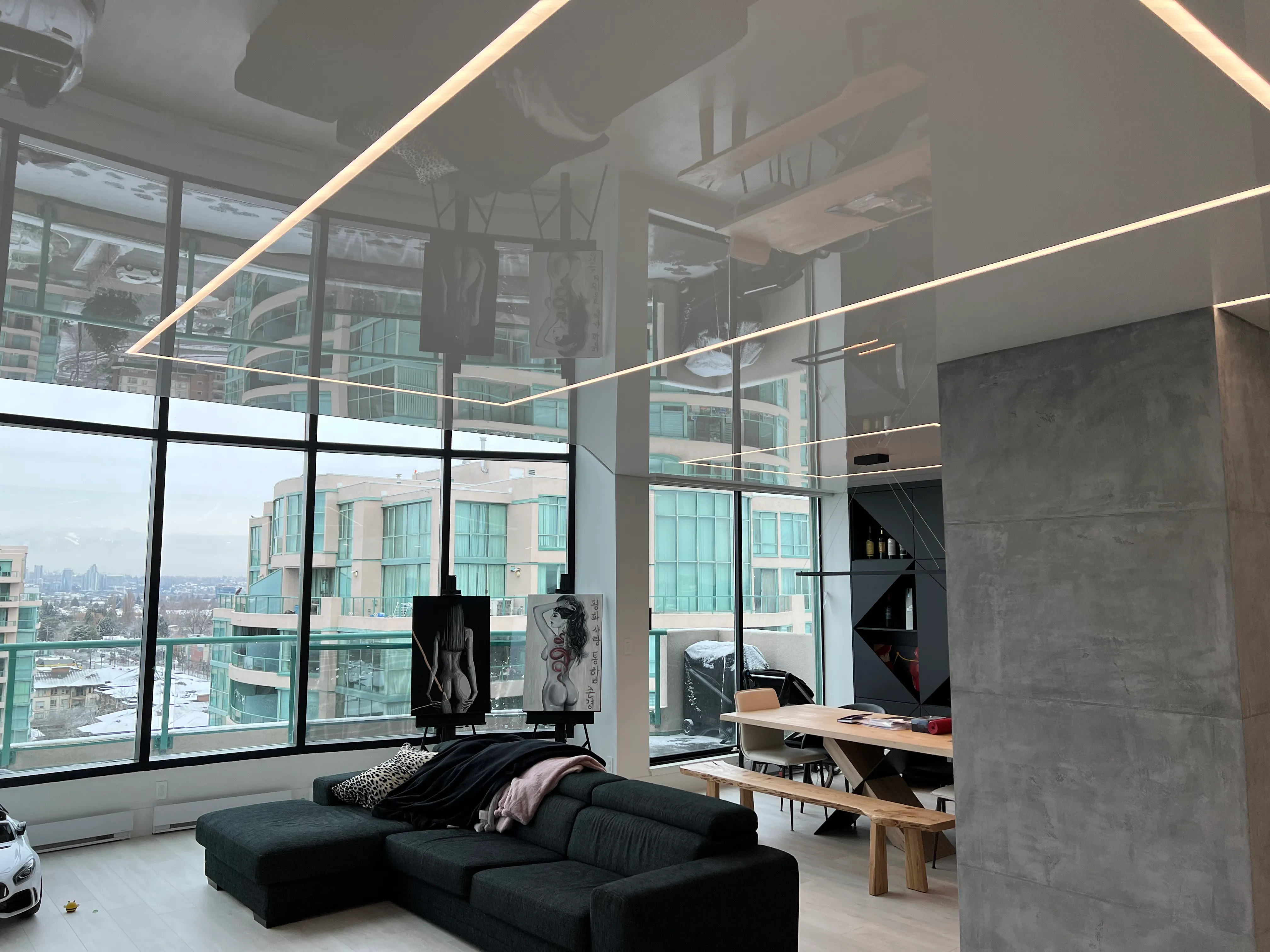
Discuss a Stretch Ceiling
Tell us the room, the current ceiling condition and whether lighting is being integrated. We will advise on finish, height loss and sequencing.