
Polished plaster in Vancouver.
A burnished lime finish with a controlled sheen — more reflective than matte Marmorino, quieter than full Venetian. The finish most clients actually want when they say they want plaster walls.
Sheen you can control, depth you cannot fake.
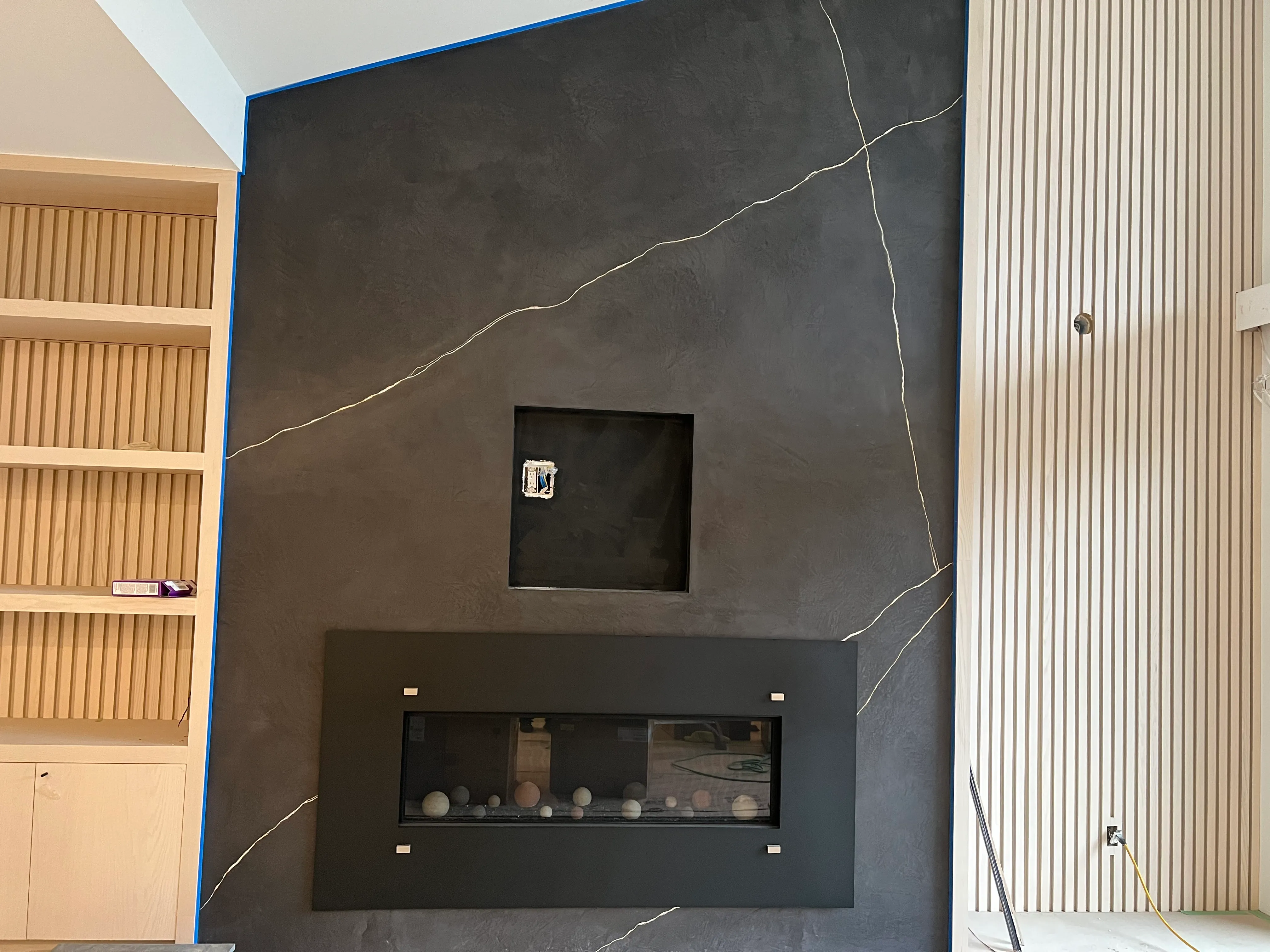
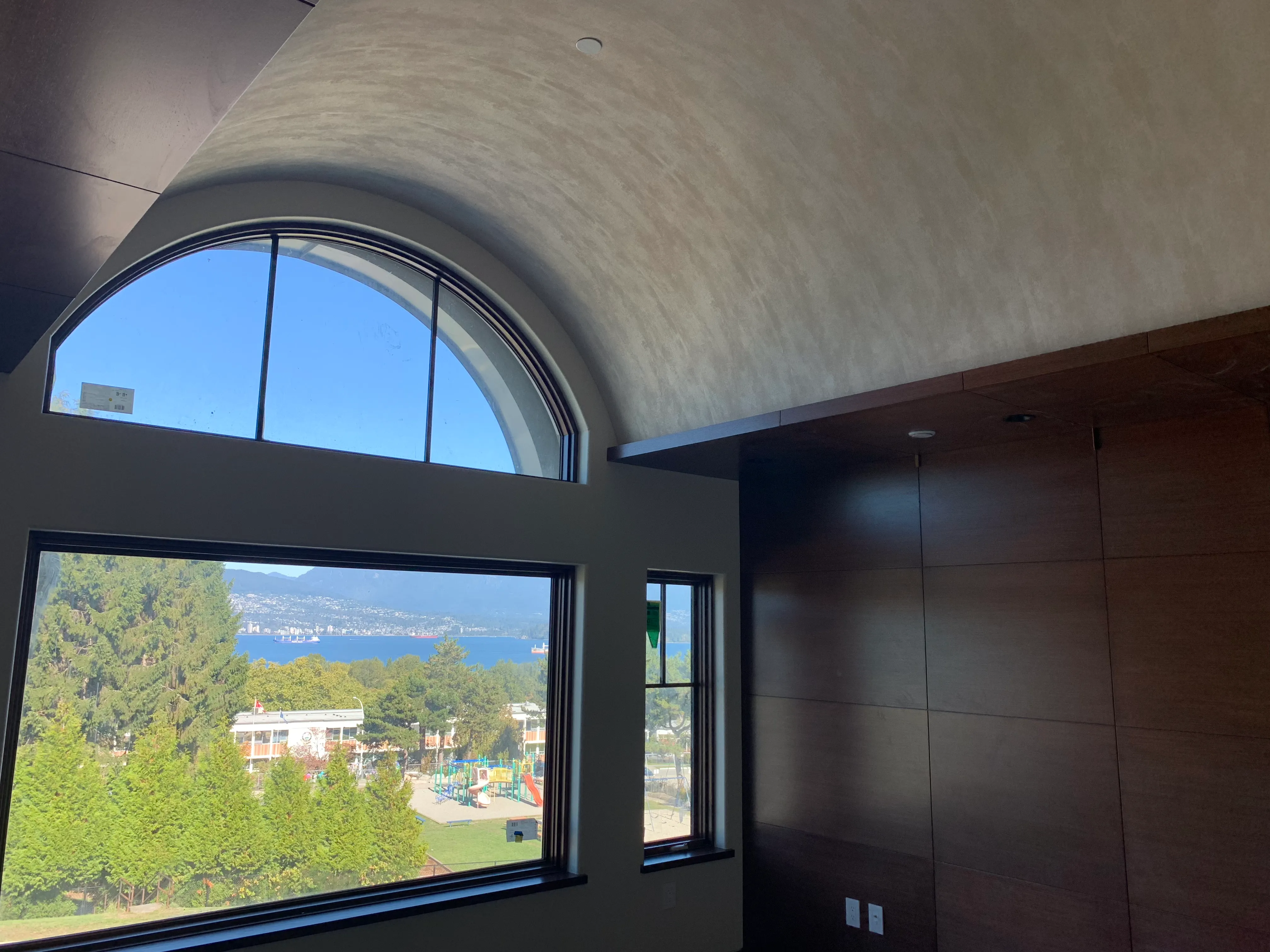
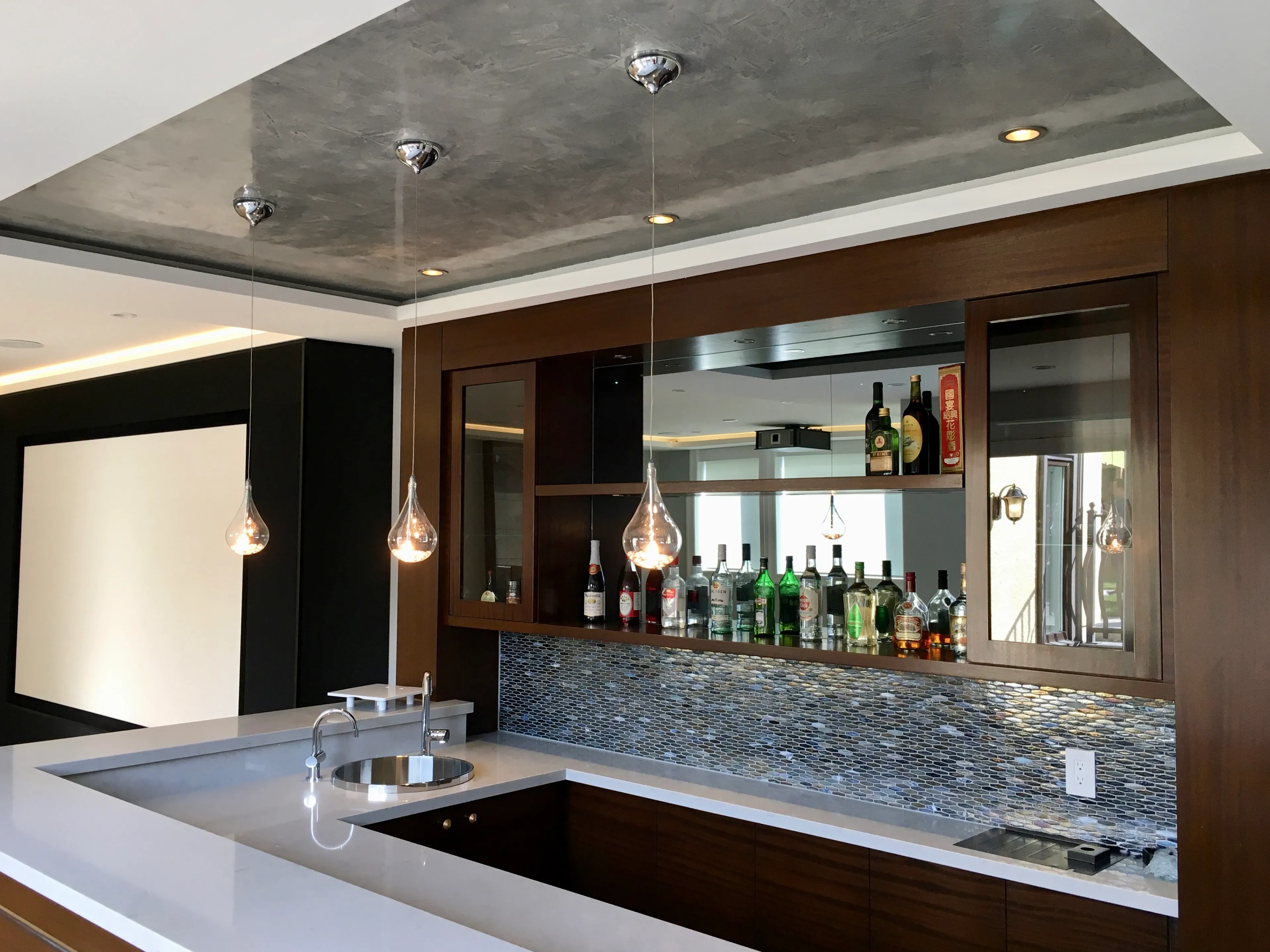
Polished plaster sits between two extremes. Marmorino finishes matte and tactile; full Venetian is burnished to a near-mirror. Polished plaster is compressed enough to develop a soft, even lustre that catches light across a wall without turning it into a reflective surface.
Like all lime finishes it is applied in thin successive passes and compressed with a steel trowel. The sheen comes from the burnishing, not from a topcoat — which is why it reads as depth within the wall rather than as a coating sitting on top of it.
Because sheen is set by how hard and how long the surface is worked, it is agreed on a sample board before any wall is coated. Two plasterers working the same material to different pressures produce visibly different results.
Residential and commercial applications.
Living and dining walls
Full-height walls where the lustre shifts as daylight moves across the room. Reads quiet in the morning and warm under lamplight.
Entrances and stairwells
Circulation spaces where a flat painted wall would feel unfinished and full-gloss Venetian would feel showy.
Bedroom feature walls
A single headboard wall, often in a deeper tone, where texture does the work instead of wallpaper or panelling.
Reception areas
The first surface a visitor stands in front of. Durable, repairable, and it does not date the way a printed finish does.
Hospitality interiors
Restaurants and bars where warm artificial light is the main light source and a matte wall would read flat.
Retail and showroom walls
Backdrops that give product something to sit against without competing with it.
What to settle before we start.
Polished plaster is unforgiving of a poor substrate. Because the surface is compressed and reflective, any undulation in the wall behind it is amplified rather than hidden.
We do not publish square-foot pricing. Sheen, substrate condition and geometry change the labour more than the area does, so every quote follows a site visit.
How the work runs.
Sample development
Boards prepared in the specified colour and sheen, reviewed in the room's own daylight and artificial light.
Substrate preparation
Walls filled, sanded and primed to a flatness the finish can carry without amplifying defects.
Application
Successive thin coats applied and compressed, working wall by wall so no join falls in the middle of a plane.
Burnishing and protection
The surface is worked to the agreed sheen and sealed where the location calls for it, then reviewed with you.
Polished plaster, answered.
What is the difference between polished plaster and Venetian plaster?
Both are lime-based and both are burnished. Venetian plaster uses a finer marble aggregate and is worked to a much higher polish with visible optical depth. Polished plaster stops short of that, giving a softer, more even lustre. In practice, polished plaster suits larger wall areas where full Venetian would be overwhelming.
Is polished plaster the same as microcement?
No. Microcement is cement-based, applied thicker, and used on floors and wet areas as well as walls. Polished plaster is lime-based and used on walls and ceilings. They are different materials with different properties, and we treat them as separate services for that reason.
Can it be repaired if it gets damaged?
Localised damage can usually be made good, though a repair on a burnished surface is more visible than on a matte one and may need the full wall plane reworked to blend. We assess this case by case rather than promising an invisible fix.
How long does a wall take?
It depends on substrate condition, area, and how many corners and reveals are involved, and each coat needs to cure before the next. We give a schedule after the site visit rather than a general figure, because a flat single-plane wall and a stairwell with returns are not comparable.
Related services.
Venetian plaster
The higher-polish finish in the same lime family, for feature walls where you want maximum depth.
Explore Venetian PlasterLiquid metal finishes
Real metal particles burnished and patinated, for walls and details that need more presence.
Explore Liquid MetalMicrocement
The cement-based seamless surface for floors, bathrooms and wet areas.
Explore MicrocementCustom lighting
Grazing and cove light detailed to reveal the texture rather than flatten it.
Explore Custom LightingPremium Materials We Work With
Polished plaster systems we apply — manufacturer details to be added.
See the sheen before you commit.
Hand-burnished finishes should be approved on a board, in your room, under your light. We work across Vancouver, Burnaby, North and West Vancouver, Richmond, Coquitlam and Surrey.