
Liquid metal finishes in Vancouver.
Real metal — bronze, brass, iron, copper — applied as a finish, then burnished and patinated. The surface of solid metal on forms that would be impractical or far too heavy to cast.
Not metallic paint. Actual metal.
Metallic paint contains pigment that imitates metal. Liquid metal contains metal — finely ground bronze, brass, iron or copper suspended in a binder and applied over a shaped substrate. Once cured it is sanded and burnished until it behaves like solid metal to the eye and to the hand.
Because the particles are genuinely metallic, the surface can be patinated. Iron can be encouraged to rust in a controlled way; bronze and copper can be aged to a verdigris. That behaviour is chemistry, not printing, which is why the result does not read as an imitation.
And because it is applied rather than cast, it wraps curves, reveals, columns, ceilings and furniture forms at a fraction of the weight. A column that would need structural support in solid bronze needs none in liquid metal.
What we apply.
Bronze
Deep and warm, and the most forgiving under artificial light. The usual starting point for feature walls.
Brass
Lighter and more reflective. Reads bright when polished, softens considerably when patinated.
Iron
Cool and industrial, and the metal that takes a controlled rust patina most convincingly.
Copper
The most dramatic when aged, moving from bright through brown to verdigris depending on how far it is taken.
Where it earns its place.
Liquid metal is a small-area material. It works because it is used sparingly — one wall, one ceiling plane, one run of joinery — against quieter surfaces around it.
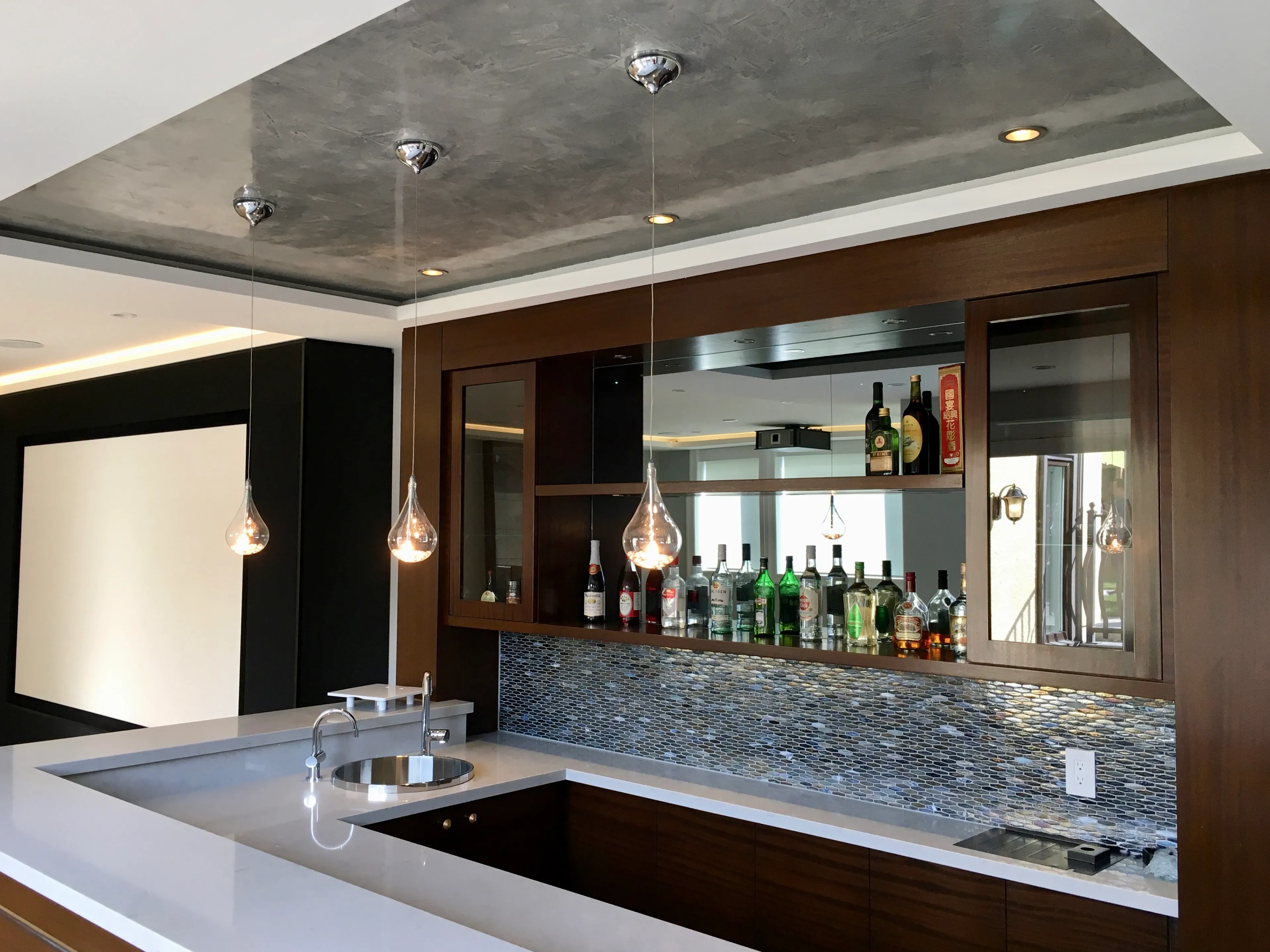
A ceiling that behaves like metal.
A metallic finish taken across a bar ceiling rather than a wall. Applied overhead, the surface picks up the pendants below and throws warmth back down into the room — something a painted ceiling cannot do.
Discuss a liquid metal finishLiquid metal, answered.
Is liquid metal the same as metallic paint?
No. Metallic paint uses pigment to imitate metal. Liquid metal contains real metal particles which are burnished after curing and can be chemically patinated, so the surface oxidises and reflects the way metal does — because it is metal.
Can the patina be controlled?
Yes, within limits. Patination is a chemical reaction we start and then stop at the agreed point, which is why it is developed on a sample first. Because it is a reaction rather than a print, no two panels are identical — that variation is the reason to use it.
Where should it not be used?
We would not specify it across a whole room, or on surfaces that take heavy hand contact or abrasion without a protective system discussed first. It is a feature material, and it works because the surfaces around it are quiet.
Can it go over curves and columns?
Yes — that is one of its main advantages. Because it is applied rather than cast or fabricated, it follows curved walls, columns, reveals and shaped joinery without the weight, cost or structural support solid metal would require.
Related services.
Venetian plaster
The lime finish most often specified on the surrounding walls, so the metal reads as the feature.
Explore Venetian PlasterPolished plaster
A softer burnished lime finish for larger wall areas around a metal feature.
Explore Polished PlasterMicrocement
Seamless cement-based surfaces for the floors and wet areas beneath.
Explore MicrocementCustom lighting
Grazing light detailed to rake across the metal and bring out the patina.
Explore Custom LightingPremium Materials We Work With
Liquid metal finish systems we apply — manufacturer details to be added.
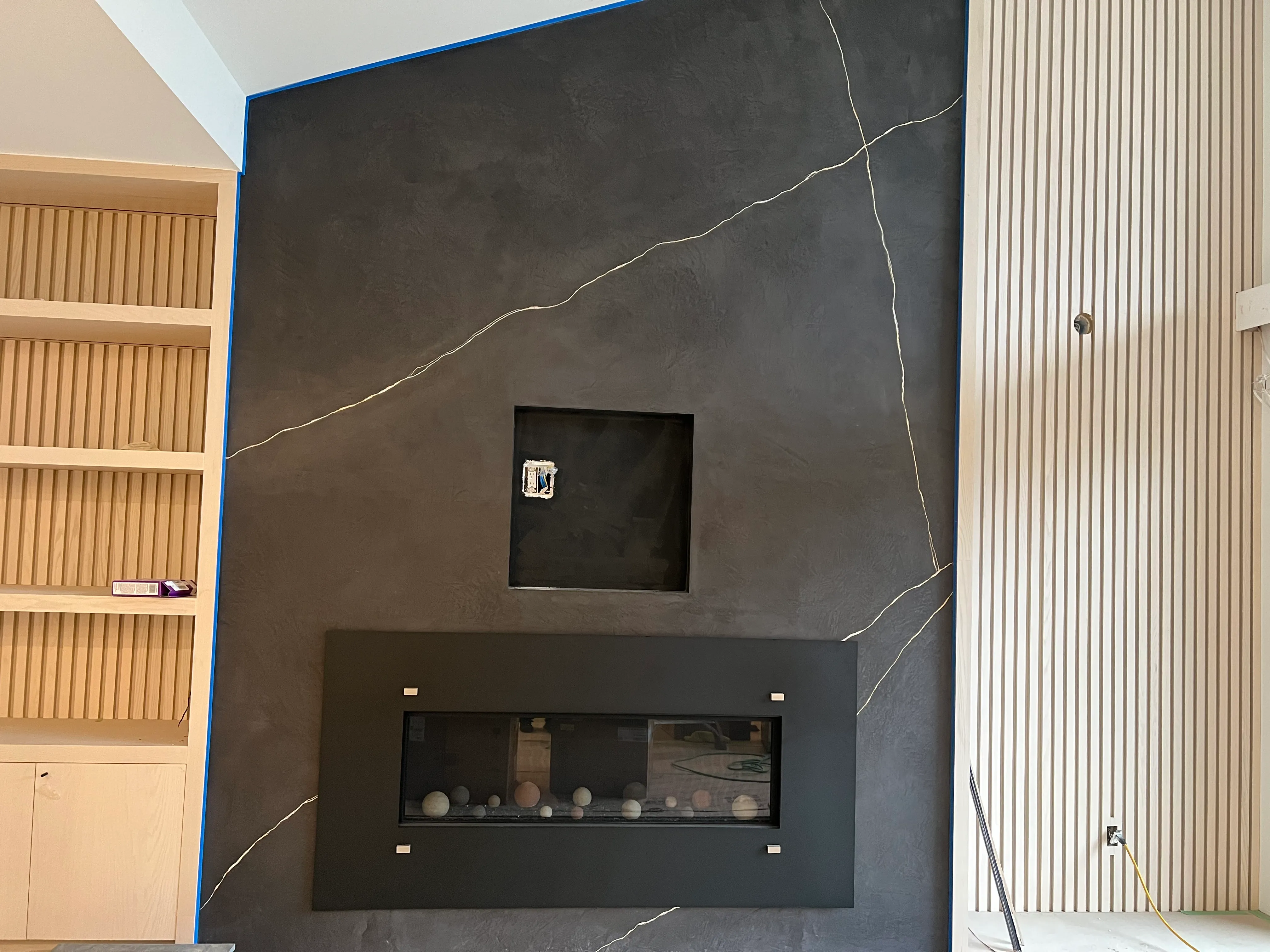
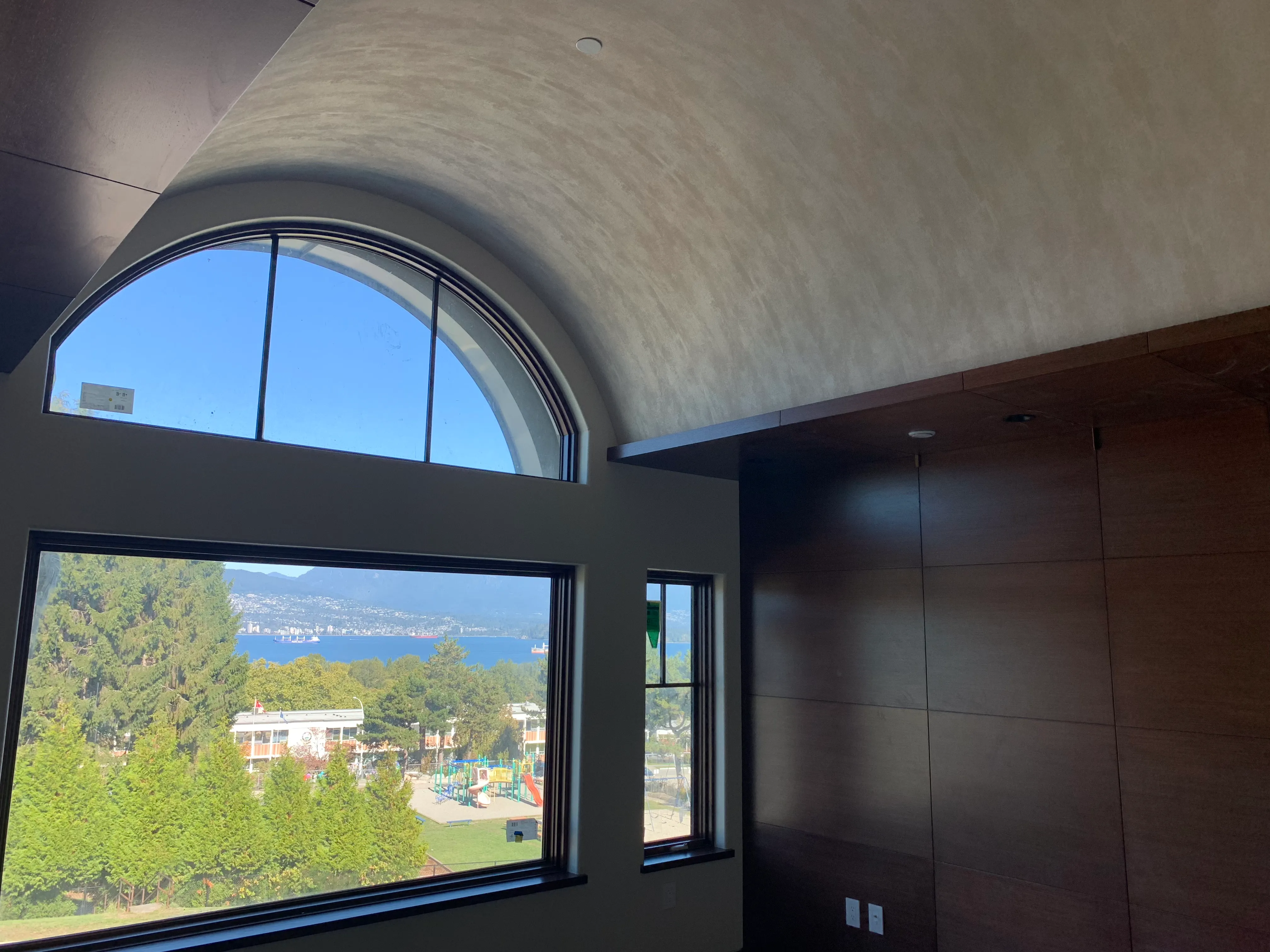
Start with a sample panel.
Metal and patina are decided on a physical sample, not a photograph. We work across Vancouver, Burnaby, North and West Vancouver, Richmond, Coquitlam and Surrey.